Terbium Oxide (Tb4O7) Powder (CAS No. 12037-01-3)
Request a Quote
Enter the quantity you need and add to your quote list for pricing inquiries.
Product Details
| Name | Terbium(III,IV) Oxide | Molecular Formula | Tb4O7 | Molecular Weight | 747.6972 | |||
|---|---|---|---|---|---|---|---|---|
| Density | 7.3 g/cm3 | Melting Point | 2340°C | Boiling Point | / | |||
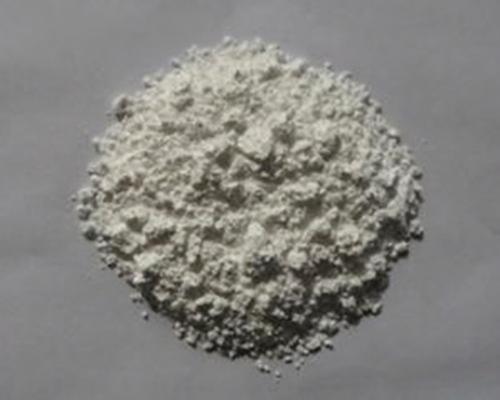
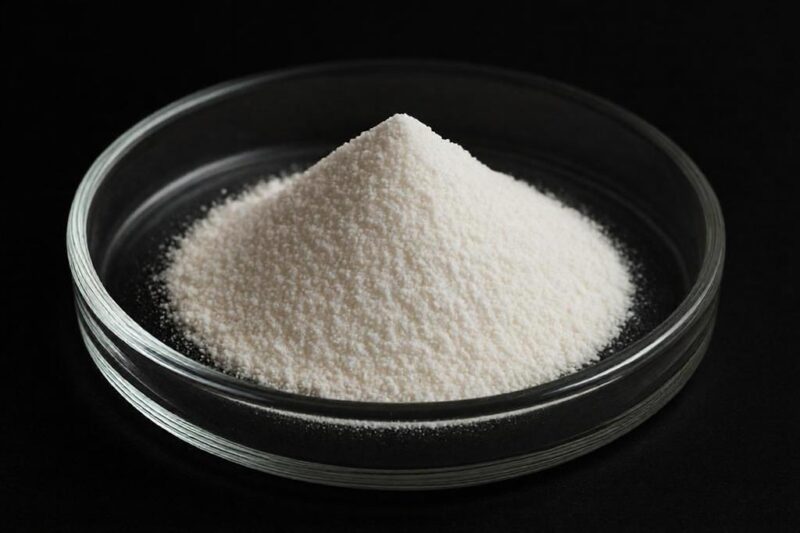
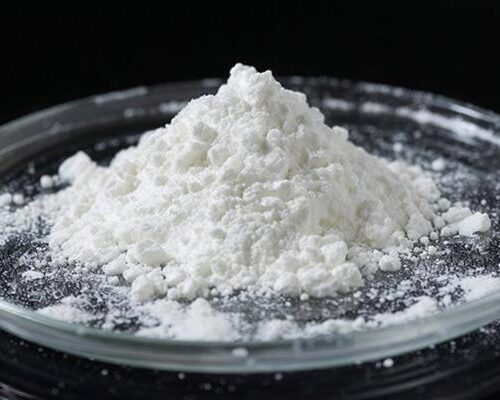
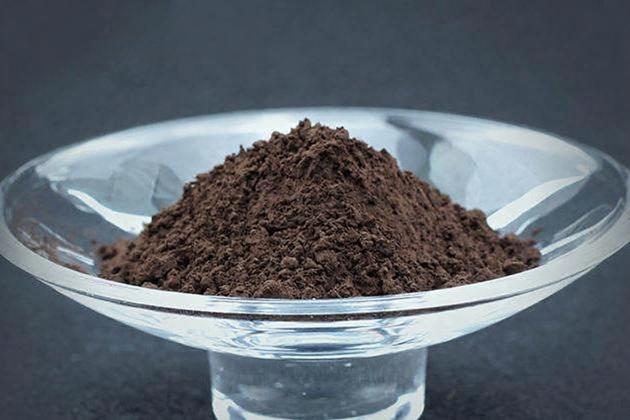
| Solubility | Insoluble in water | Appearance | Brown powder | CAS Number | 12037-01-3 | |||
| Storage | Store in a dry place | |||||||
Terbium Oxide Description
Terbium (III, IV) oxide (Tb4O7) is one of the most commercially important terbium compounds. It is produced by calcination of terbium oxalate or other terbium salts, resulting in a stable brown powder that is insoluble in water. Tb4O7 serves as the primary raw material for producing other terbium compounds and as a dopant in phosphors, lasers, fuel cells, and magneto-optical devices. Its ability to emit green fluorescence under UV excitation makes it essential for display and lighting applications.

Terbium Oxide Specification
| CAS Number | 12037-01-3 |
| Chemical Formula | Tb₄O₇ |
| Molar Mass | 747.72 g/mol |
| Appearance | Brown Powder |
| Purity | ≥99.95% (custom up to 99.999%) |
| Melting Point | 2337°C |
| Solubility | Insoluble in water |
| Particle Size | Customized |
| Density | ~7.3–8.3 g/cm³ (typical for Tb₄O₇) |
| Crystal Structure | Cubic (fluorite-related) |
| Europium Equivalent | ~5–10% (green phosphor precursor) |
*Specifications are typical values. Custom particle sizes and purity grades available upon request.
Quality Control & Testing Methods
Standard quality assurance measures for terbium oxide powder include:
- Purity Verification – Tb₄O₇ content and trace impurities analyzed via ICP-OES or ICP-MS (≥99.95% standard, up to 99.999%).
- Loss on Ignition (LOI) – Per applicable rare earth oxide standards — measuring volatile impurities.
- Particle Size Distribution – Per ASTM E2651 (laser diffraction) for custom particle size verification.
- X-Ray Diffraction (XRD) – Phase identification confirming Tb₄O₇ crystal structure.
- Color & Appearance Inspection – Visual verification of brown powder consistency.
- Moisture Content – Per Karl Fischer or gravimetric method.
Additional test reports or certifications can be provided upon request.
Terbium Oxide Applications
Tb4O7 is usually used as the raw material to make other terbium chemicals. Terbium oxide is also an important compound for ceramic, electronic, and optics products. The typical purity of our Terbium oxide is 99.99%, 99.999%.
Phosphors: Terbium oxide is a key component in the production of green phosphors used in cathode ray tube (CRT) displays, LED lights, and fluorescent lamps. When excited by electron bombardment or UV light, terbium-doped phosphors emit green light, contributing to the desired colors in displays and lighting.
Solid-State Lighting: Terbium-doped phosphors are used in solid-state lighting applications, such as white LEDs and compact fluorescent lamps (CFLs). They help improve the color rendering index (CRI) and overall efficiency of these lighting sources.
Catalysis: Terbium oxide and its compounds have been studied for their catalytic properties in various chemical reactions, including oxidation and reduction reactions. They can act as catalysts or co-catalysts in industrial processes.
Fuel Cells: Terbium oxide-based materials are investigated for their potential use in solid oxide fuel cells (SOFCs). They can serve as electrolytes or electrode components in these high-temperature fuel cells.
Magneto-Optical Devices: Terbium oxide is used in magneto-optical materials for applications like magneto-optical data storage, which relies on the Faraday effect to record and read data using polarized light.
Glass and Ceramics: Terbium oxide is added to glass and ceramic formulations to create materials with unique optical and magnetic properties. It is used in the production of specialized glass, such as terbium-doped glass fibers for telecommunications.
Semiconductor Industry: Terbium oxide is used in the semiconductor industry for applications like phosphor screens in electron microscopes and cathodoluminescence detectors.
Research and Development: Terbium oxide is utilized in scientific research and development, particularly in materials science, chemistry, and physics, for its unique optical, magnetic, and electronic properties.
Environmental Sensors: Terbium-based materials have been explored for use in sensors, such as luminescent sensors for detecting specific analytes and environmental pollutants.
Terbium Oxide Packing
Our terbium oxide is clearly tagged and labeled externally to ensure efficient identification and quality control. Great care is taken to preserve the quality of the product in its original condition.