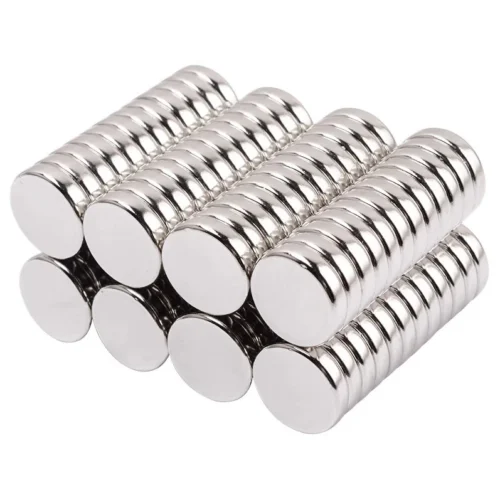

Less than 5% of rare earth magnets are recovered globally today, with most neodymium, praseodymium, dysprosium and terbium content lost in shredded e-waste or melted into undifferentiated steel scrap. Rare earth magnet recycling is moving from pilot scale to commercial operation in 2026, driven by two forces: China’s continued dominance of roughly 70% of global REE processing, and the fact that short-loop recycling uses an estimated 88-90% less energy than primary mining and refining.
How Rare Earth Magnet Recycling Works
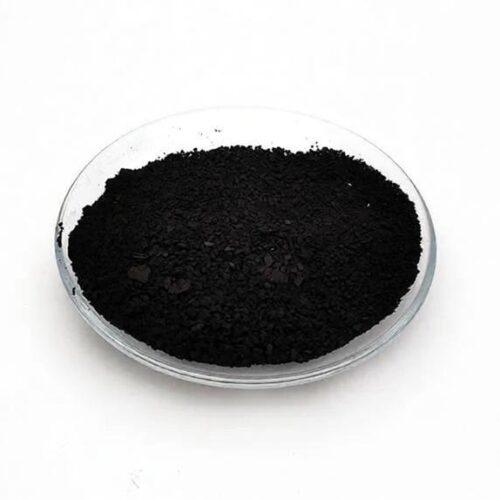
Three distinct pathways exist for recovering rare earth content from end-of-life magnets. The first, direct short-loop processing, takes magnet scrap straight back to usable alloy without full chemical dissolution. The best-known example is Hydrogen Processing of Magnet Scrap (HPMS), developed at the University of Birmingham, which exposes NdFeB magnets to hydrogen gas at room temperature and atmospheric pressure, causing them to crumble into a demagnetised alloy powder. Nickel and copper coatings peel away mechanically during the process rather than requiring separate stripping.
The second pathway, hydrometallurgical processing, is used when magnets cannot be cleanly removed from a device. Scrap is shredded and the rare earth content dissolved in acid or solvent, then separated oxide by oxide. This is more chemically intensive than HPMS but tolerant of mixed, contaminated feedstock. The third pathway, pyrometallurgical smelting, handles the most heterogeneous waste streams but produces higher solid waste volumes and is the most resource-intensive of the three.
Rare earth magnet recycling at commercial scale currently favours short-loop processing where feedstock quality allows it, with hydrometallurgical and pyrometallurgical routes reserved for harder-to-sort material.
HyProMag and the HPMS Breakthrough
HyProMag, a subsidiary of Mkango Resources via its 79.4%-owned Maginito Limited (the remainder held by CoTec Holdings), operates the two most advanced commercial HPMS sites outside China. HyProMag UK, at Tyseley Energy Park in Birmingham, was officially opened on 15 January 2026 by UK industry minister Chris McDonald. The HPMS reactor recovers over 400 kg of rare earth alloy per batch, with capacity starting at 100 tonnes per annum on a single shift and rising to more than 300 tpa on multiple shifts; a further grant-backed expansion path toward 1,000 tpa is under separate evaluation.
HyProMag Germany, at Pforzheim, officially opened on 28 April 2026 at Hannover Messe, attended by a representative of Germany’s Federal Ministry for Economic Affairs and Energy. The site is permitted to handle up to 750 tonnes per annum, with an initial operating target of 100 tpa rising toward 350 tpa in the near term as equipment installation and process qualification continue. Both facilities sit within HyProMag’s wider rollout, which also includes a US site targeting first production in 2027.
Why Rare Earth Magnet Recycling Is Hard to Scale
The core constraint on rare earth magnet recycling is not chemistry — it is disassembly. A single hard-drive magnet can require removal of 8-10 security screws plus adhesive and a nickel coating before HPMS or any other process can begin. Most consumer electronics and end-of-life vehicles are shredded whole rather than disassembled, meaning magnetised NdFeB powder ends up stuck to ferrous scrap and to shredder equipment itself, with the rare earth value effectively lost.
Economics compound the design problem. Recycling operations need feedstock volume and consistent quality to compete with primary mining on cost, and most collection systems were never built with magnet recovery in mind. Coatings and oxygen control during remelting add further processing steps that primary-mined material does not require. These barriers explain why recovery rates remain in the low single digits even as recycling technology itself has matured to commercial scale.
Recycling and the Rare Earth Supply Chain
The clearest signal that rare earth magnet recycling has moved into mainstream supply chain planning is MP Materials’ agreement with Apple. MP Materials is building a dedicated recycling line at its Mountain Pass, California site as part of a $500 million partnership to supply Apple with magnets made from recycled feedstock at its Fort Worth “Independence” facility. As of mid-2026 the recycling line remains under construction; recycled-magnet shipments into Apple products are targeted for 2027, and MP Materials’ own announcement frames the facility as a build-out rather than a current operation.
Beyond the HPMS and MP Materials stories, broader ex-China recovery infrastructure continues to scale. Paladin Envirotech, a private, PE-backed IT-asset-disposition and e-waste recycler, added rare earth recovery as one line within its electronics-recycling business and expanded into the Netherlands in January 2026, alongside a strategic investment from South Korea’s Daeheung M&T in June 2026 — a smaller but indicative data point that recovery capacity is building in more than one jurisdiction at once. Production figures by country and end-use are tracked by the USGS National Minerals Information Center.
The Outlook for Rare Earth Magnet Recycling
Rare earth magnet recycling capacity outside China is still measured in the low hundreds of tonnes per year against a global magnet market in the tens of thousands of tonnes — but the trajectory is toward multiples of current scale, not incremental growth. HyProMag’s UK and German sites are both on staged expansion paths, and MP Materials’ Mountain Pass line adds a second large vertically integrated producer to the recycling story once it reaches production.
For a fuller picture of who else is building recovery capacity, see REM’s Top 10 Rare Earth Recycling Companies ranking and our coverage of the UK rare earth recycling sector specifically. The next 12-18 months of commissioning data from HyProMag Germany and the Mountain Pass build-out will determine how quickly rare earth magnet recycling moves from a supply-security narrative to a measurable share of total NdFeB supply.
This article is for informational purposes only and does not constitute investment advice. Facility capacities and project timelines are subject to revision by the companies named.
What is rare earth magnet recycling?
Rare earth magnet recycling recovers neodymium, praseodymium, dysprosium and terbium from end-of-life NdFeB and SmCo magnets found in EVs, wind turbines, hard drives and consumer electronics, rather than mining new material. It is typically done through direct short-loop processing, hydrometallurgical dissolution, or pyrometallurgical smelting — see the article above for how each works.
What is HPMS and why does it matter for rare earth magnet recycling?
Hydrogen Processing of Magnet Scrap (HPMS) is a short-loop technology, developed at the University of Birmingham, that exposes magnets to hydrogen gas to make them crumble into a reusable alloy powder without full chemical dissolution. It is significantly more energy-efficient than primary mining and refining, which is why it has become the leading commercial technology in rare earth magnet recycling outside China.
Why is so little rare earth magnet recycling happening today?
The main barrier is disassembly, not chemistry. Magnets are glued, plated and embedded deep inside devices, and most consumer electronics and end-of-life vehicles are shredded whole rather than taken apart, so recoverable material ends up mixed into general scrap. Achieving the feedstock volume and consistency needed to compete with primary mining on cost is the other major constraint.
Who are the main companies in rare earth magnet recycling?
HyProMag, a subsidiary of Mkango Resources, operates the leading commercial HPMS facilities in the UK and Germany. MP Materials is building dedicated recycling capacity in the United States tied to a supply agreement with Apple. A wider group of e-waste and electronics recyclers, including some without rare earths as their core business, are adding magnet recovery as one processing line. See REM’s Top 10 Rare Earth Recycling Companies ranking for the full landscape.
How does rare earth magnet recycling fit into the broader supply chain?
Recycled rare earth magnets reduce reliance on primary mining and on processing capacity concentrated in China, supporting supply chain resilience for manufacturers in defence, automotive and consumer electronics. Major OEM commitments — such as Apple’s agreement with MP Materials — are accelerating commercial investment in recycling infrastructure, though most large facilities are still in build-out or early ramp-up phases.
Is rare earth magnet recycling cheaper than mining new material?
Short-loop recycling methods such as HPMS use substantially less energy than primary mining and refining, which gives recycled material a structural cost and emissions advantage once a facility reaches scale. The challenge is reaching that scale — recycling economics depend on consistent, high-volume feedstock, which the industry is still building the collection infrastructure to supply.